Project/Restoration/Completed
Weston Federal Colonial
A Fairfield County Federal restored with a curatorial interior layer.
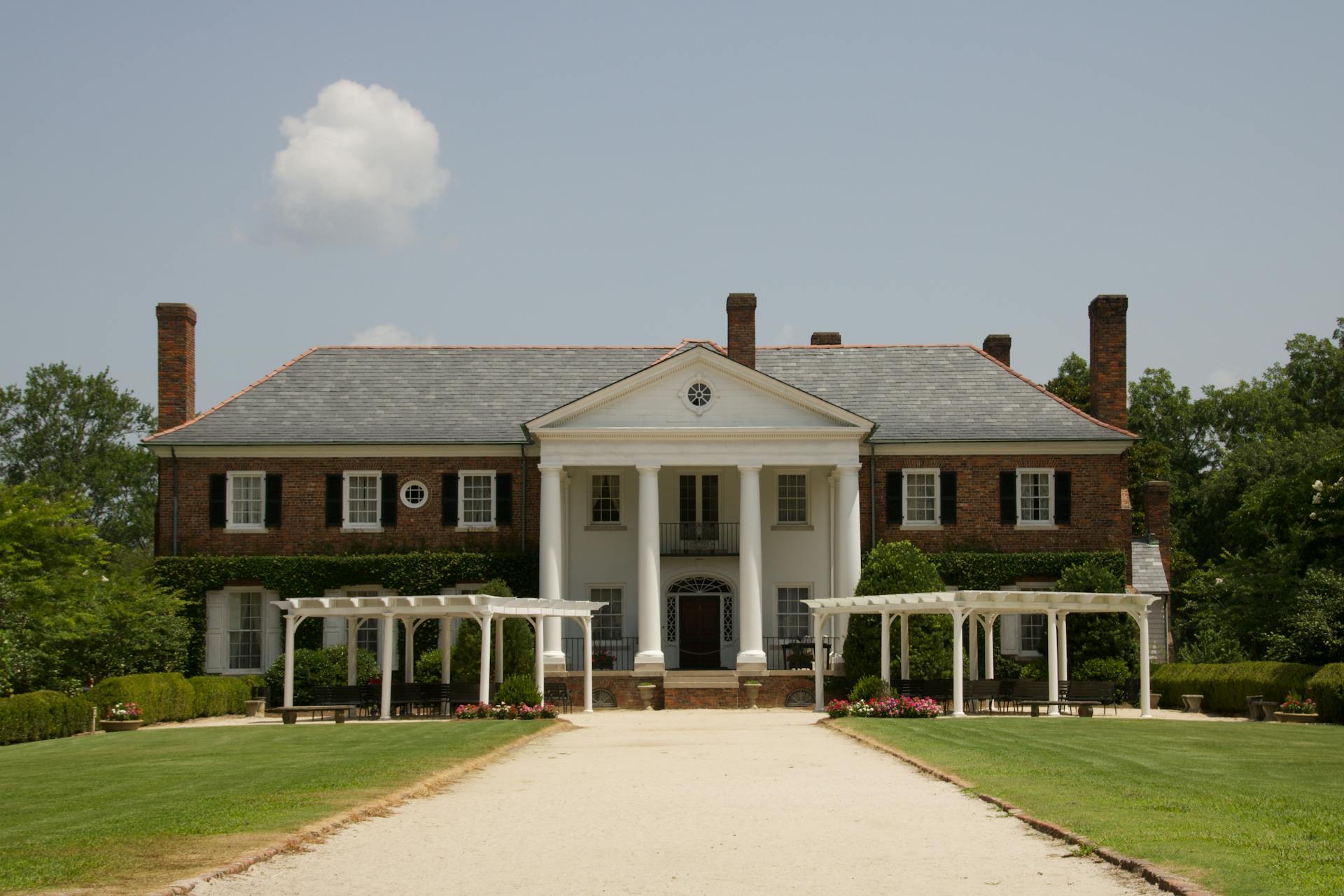
The house sits on a stone ledge in western Fairfield County, three clapboards from its original color, with a kitchen ell added in 1923 and a screen porch added in 1968. We took the project as a restoration first and an interior commission second. Paint, sash, hardware, plaster, and chimney work were resolved before a single fabric or rug was specified. The result reads as a house that has been quietly maintained for two centuries, with a curatorial interior layered onto fabric that was already worth keeping.
Site reading and structural assessment
Before any drawings, we walked the property in three seasons: late winter to see the frame through bare maples, late spring to read drainage off the ledge, and early autumn to watch how afternoon light enters the south rooms. A structural engineer opened plaster at the southwest corner and confirmed the original 8x10 hewn sills were sound except for a four-foot run under the parlor window. We pulled three clapboard samples for paint analysis and recovered the 1820s base color under five later coats. The chimney mass was sound; the parlor flue needed relining; the kitchen ell needed a new footing on the north side. From that reading we wrote the scope: keep the frame, repair the sills locally, restore every original sash, replace the 1968 porch with a four-season room set on a fieldstone plinth, and build a wine room into the south half of the basement.
Sash, paint, and the exterior envelope
Twenty-two of the twenty-eight original sash survived. We sent them to a sash shop in Litchfield for reglazing with restoration glass, new linseed putty, and hand-rubbed wax on the muntins. The six missing sash were reproduced from the original profile to a sixteenth of an inch. Clapboards were repaired in place where possible; replacements were quartersawn eastern white pine, milled to the same eight-inch reveal. Paint is a linseed-bound formula in the recovered period color, applied in three thinned coats by a painter from New Milford who has been doing only old houses for thirty years. The gutters are lead-coated copper, half-round, on hand-forged brackets. The roof is hand-split cedar, dipped, expected to last sixty years.
Floors, plaster, and the interior ground
The original wide-plank floors, mostly seven to eleven inches in pumpkin pine, were screened by hand and finished with hand-rubbed wax over a single thin coat of tung oil. No polyurethane in the house. Plaster was repaired with a three-coat lime system applied by a plasterer who trained in Edinburgh; the ground is a warm bone that warms further under candlelight. The interior color comes from a limewash mixed on site, brushed in two coats over the lime ground, with iron oxide for the dining room and a touch of yellow ochre for the upstairs hall. Trim is brush-painted in linseed oil paint, one shade off the wall, so the eye reads the millwork as a quiet shadow rather than a contrast.
Hardware, lighting, and the bronze layer
Every original door retained its rim lock and box catch; missing thumb latches were replaced with hand-forged Suffolk latches from a smith in the Berkshires. New hardware where it was needed is Rocky Mountain Hardware in unlacquered bronze, specified to patinate to chestnut over the first three years. Lighting is mostly candles and oil at table, with Urban Electric and Ann-Morris fixtures for working light, and a pair of Charles Edwards lanterns at the front door. No recessed cans in the public rooms. The kitchen uses a low surface-mounted brass fixture over the range and Charles Edwards picture lights over the open shelving.
Kachelofen in the family room
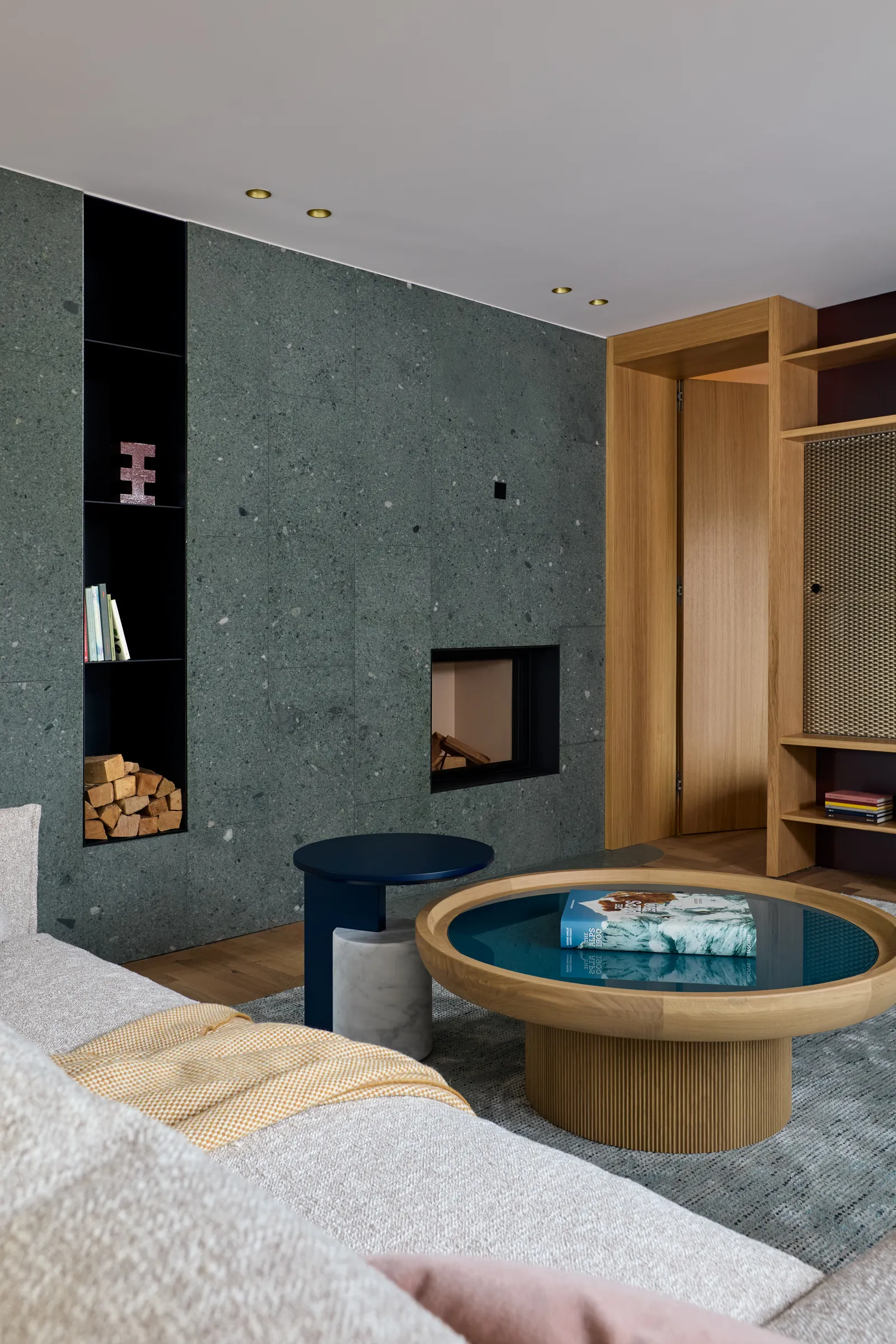
The family room is built around a Sommerhuber kachelofen in a pale sand glaze, set on a fieldstone hearth that picks up the ledge under the house. The stove was specified for the cubic volume of the room, lit twice a day in winter, and carries the house from October through April without the forced-air system running in that wing. The bench seat is built into the stove on the south face, deep enough for an adult to lie on with a book. It is the heating gesture of the house and, more than that, it is the room itself: the place the family ends up after dinner, the place the dog sleeps, the place the children read.

Textiles, drapery, and collected furniture
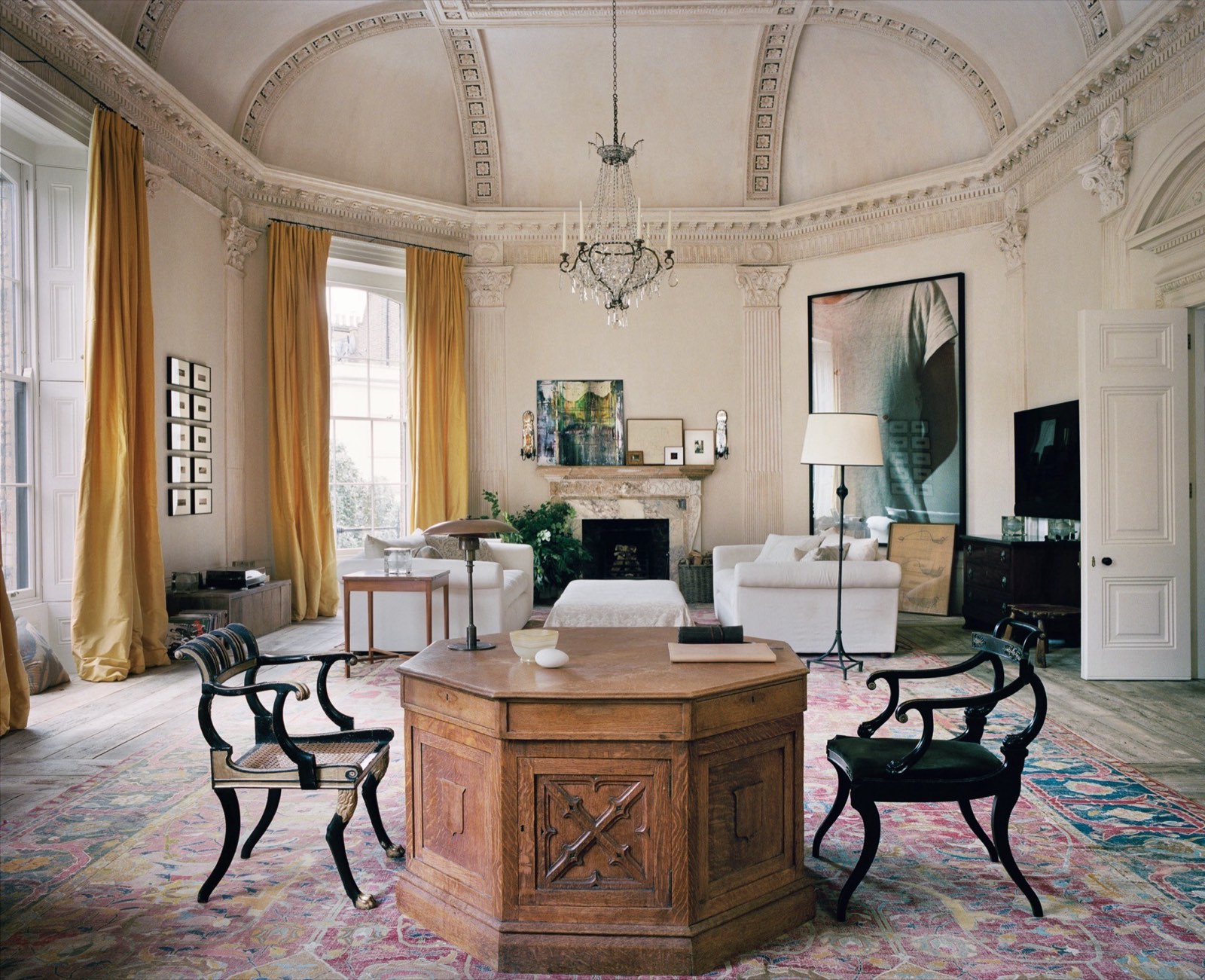
Drapery is Belgian linen from Libeco, full-stack on hand-forged iron rods, hemmed to break by a quarter-inch on the floor. Throws are Loro Piana wool in a natural and a dark walnut, kept on the back of every reading chair. Upholstery is a horsehair on the dining seats, a Holland & Sherry tweed on the library club chairs, and a Pierre Frey raw linen on the parlor sofa. The rugs are antique: a Bidjar in the dining room, a Mahal in the library, a flatweave runner up the stairs that came out of a barn in Ridgefield. Furniture is collected, not bought as a package: a Federal sideboard from a Newtown estate, a pair of Windsor side chairs from a dealer in Salisbury, a Swedish farm table for the kitchen, two Pierre Jeanneret library chairs as the one note of mid-century in the house.
The wine room
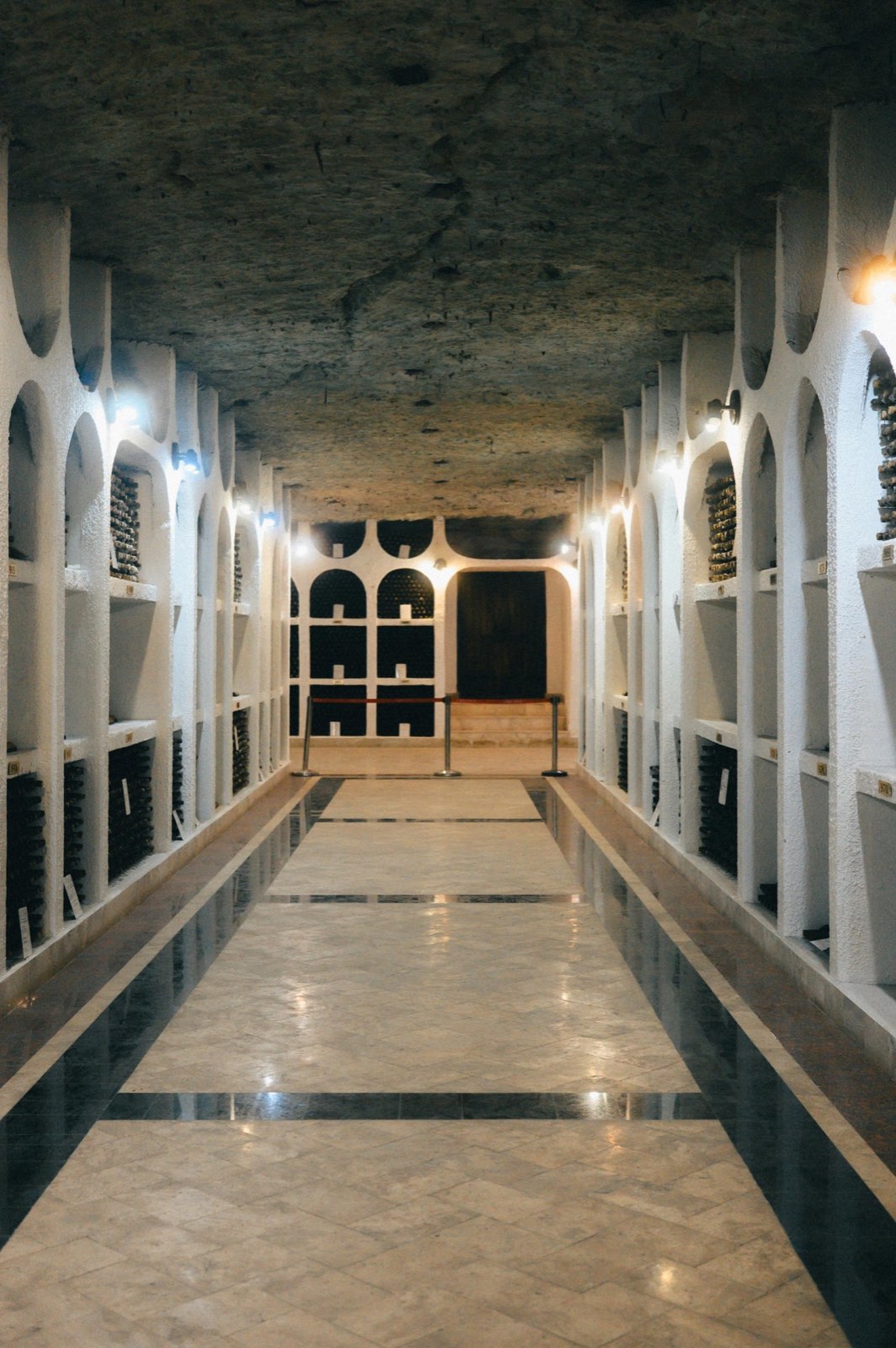
The south half of the basement was opened, the dirt floor poured as a vapor-sealed slab, and the foundation walls left as exposed fieldstone, repointed in lime mortar. Racking is fumed oak by a millworker in Bethel, sized for 800 bottles with a magnum bay and a six-bottle case lay-down. The room runs at 55 degrees and 65 percent humidity on a passive cooling loop drawn off the ledge temperature, with a small Eurocave unit as backup. The door is an inch-and-a-half fumed oak slab with a hand-forged iron pull and a single brass keyhole. The tasting table is reclaimed chestnut on a forged iron base, lit by one Urban Electric pendant in unlacquered brass.
What was kept, what was edited
We kept the front stair (cherry handrail, walnut newel, original pine treads), the parlor mantel, the dining room paneling, every original window in its opening, the back kitchen door with its old paint stratigraphy, and the small north pantry. We edited the 1923 kitchen ell into a working kitchen with a soapstone counter, an open hutch, a Lacanche range, and a second prep sink so the room could split into a cooking half and a serving half. We removed the 1968 porch and built a four-season room in fieldstone and fumed oak that reads, from the garden, as if it has been there since the 1880s.
Selected views
Weston Federal Colonial
Sources and notes
Workshops on this project
Sash shop in Litchfield, plasterer trained in Edinburgh, smith in the Berkshires, millworker in Bethel, painter from New Milford, Sommerhuber for the kachelofen, Rocky Mountain Hardware for unlacquered bronze, Libeco for Belgian linen, Loro Piana for wool, Holland & Sherry and Pierre Frey for upholstery.
Regional references
The house sits beside our work in Litchfield County, Greenwich, Westport, Darien, Ridgefield, and New Canaan, and beside the practice's restoration work in the Engadin and Lombardy. One standard of craft from Guarda to Weston.
Begin a Connecticut conversation
For a site reading on a Fairfield County or Litchfield County property, call 917.502.9236.
Discuss a Connecticut restoration.
Send a brief or call the studio. We respond to every serious inquiry within two working days.