Chesa Studio/Working positions
Philosophy
Restoration and new build, one spec sheet, one standard of craft.
We work between the Engadin and Connecticut on country houses, chalets, and family compounds in the four to ten million range. The practice carries a single discipline across a Greenwich Shingle Style, a Salisbury Federal, an Engadin chasa, and a Lombard farmhouse. What follows is the working ethic, written for the architect, the developer, the family-office advisor, or the homeowner about to commit eight figures of construction. It is the standard we hold ourselves to and the standard we ask our trades to meet. We work inside a canon that includes Hans-Jorg Ruch in Zuoz, Studio Peregalli in Lombardy, Festen at the Hotel du Couvent in Nice, and Axel Vervoordt in the Flemish countryside. We do not claim association with any of them. We name them because they describe the altitude.
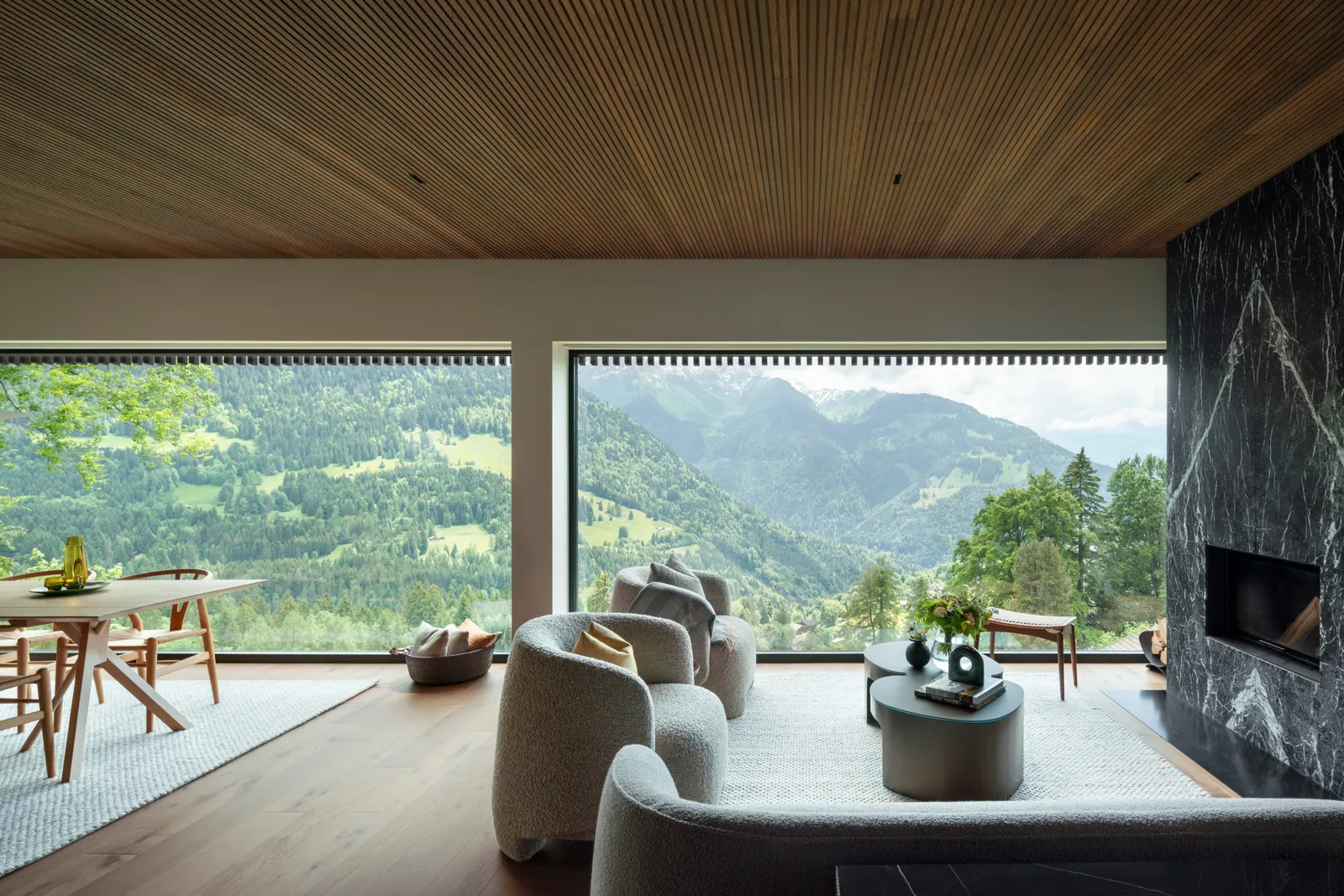
One spec sheet for restoration and new build
A 1740 Litchfield County farmhouse on its original sills and a new fieldstone house we put up on a Salisbury hillside last winter come off the same spec sheet. Both get hand-troweled lime over a lime ground, never gypsum, never atmospheric finish. Both get fumed white oak floors face-nailed in random widths, with the boards run through and finished with hand-rubbed wax, not polyurethane. Both get unlacquered bronze hardware that will go chestnut in three winters and stay there. Both get fieldstone laid in lime mortar, not portland, so the wall can move and breathe with the season. We do not run a separate, lighter language for new construction. A new house at our hand should read as inherited from the first winter, and the way you get there is by buying the same materials, hiring the same trades, and accepting the same lead times the restoration would require. If a client wants restoration economics on a new build, we are the wrong studio. If they want a house their grandchildren will inherit without apology, the spec sheet is the same one we use on a 1680 Connecticut saltbox.
Every fixed material is tied to a named workshop
Anything that gets built into the building has a workshop name on it before the drawings leave our office. Statuario for the kitchen island and the master bath comes from Henraux's Cervaiole quarry on Monte Altissimo, the quarry Michelangelo used. Where the brief calls for the broader, looser veining, we move to Calacatta Vagli, blocked at the source above Vagli di Sotto. Ceramic stoves are Sommerhuber in Steyr, with the firebox sized by a stove-setter from the Engadin who has been at it forty years. Sgraffito on the entry vault, when a client wants it, comes from one of three ateliers we work with in Guarda and Ardez, by hand, with lime mixed on the bench that morning. Terracotta floor tile for the boot room and the wine cellar is Salernes from Provence, hand-pressed, fired in the village kilns, with the irregularity that comes with it. Wrought iron at Reschio grade, the gate hardware, the stair brackets, the fire tools, gets forged by two smiths we have worked with for years, one in Umbria and one in northwestern Connecticut. Scagliola, when a tabletop or a fireplace surround calls for it, goes to Bianco Bianchi in Florence, the family that has kept the technique alive since 1955. We do not specify a material we cannot name the workshop behind. If we cannot name the workshop, we do not yet know the material.
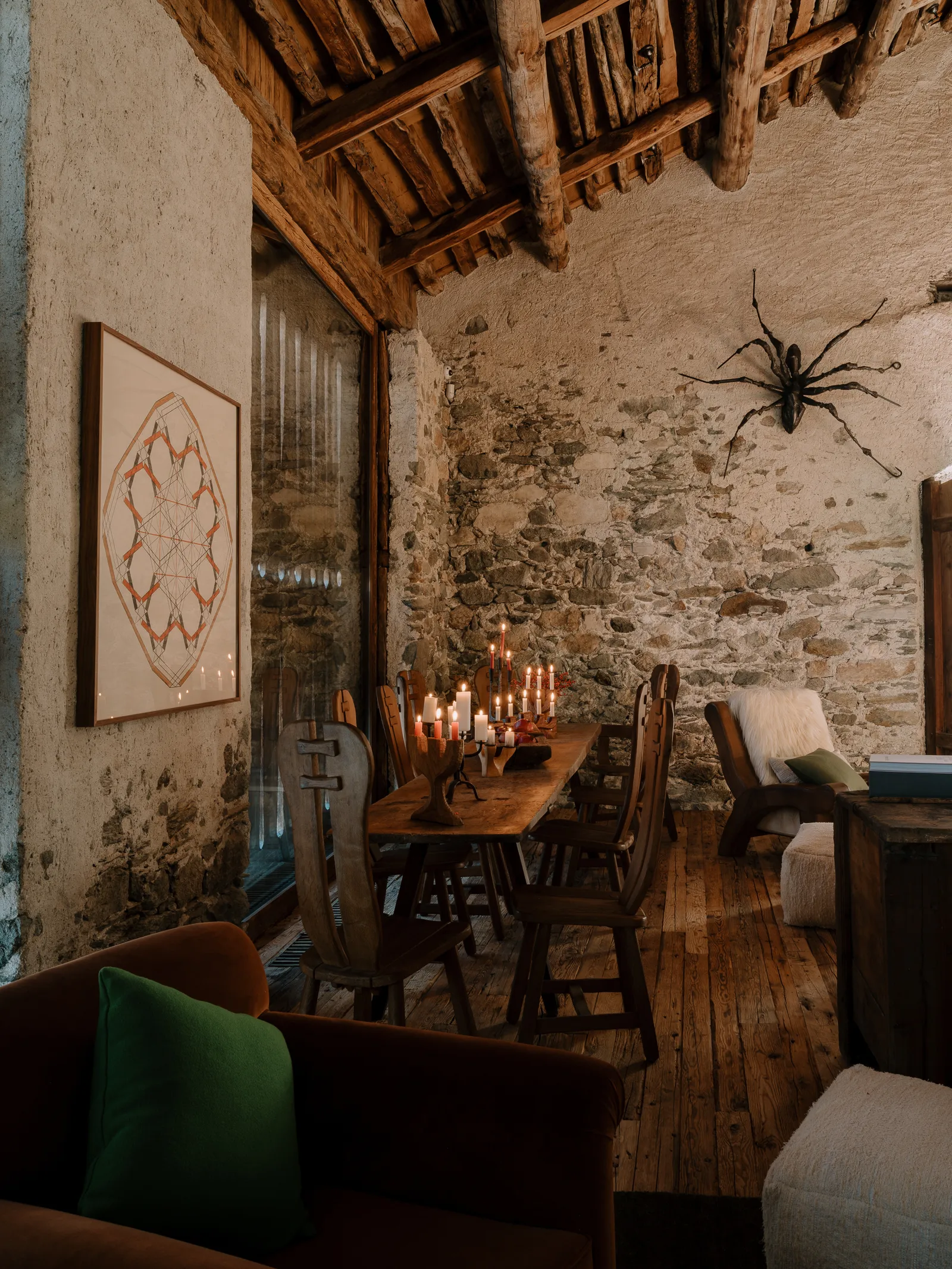
The hearth is the room. The boot room sits before the foyer.
In a Chesa house the hearth is not a feature. The hearth is the room, and the rest of the plan organizes around it. A Sommerhuber ceramic stove or a deep fieldstone fireplace, sized for the volume, becomes the gravity of the principal living space, and the seating, the bookshelves, the dining table, and the circulation are all set by it. The boot room sits before the foyer, not after it, because a house in Litchfield County in February or in the Engadin in March is entered through wet wool and salt and dog, and the first room you stand in should be lined in tile that takes it. The kitchen splits in two: a working kitchen for the cook and a quieter, warmer room for the family to sit in while the work is done, with the range vented properly and the prep sink and the secondary dishwasher kept where they belong. The laundry sits on the bedroom level, not in the basement. The wine cellar is climate-controlled and accessible without a ceremony. These are not preferences. They are working positions, and we hold them through the brief because they are what makes a large house actually liveable in the second year, the fifth year, the twentieth year.
Engadin origin, Connecticut practice
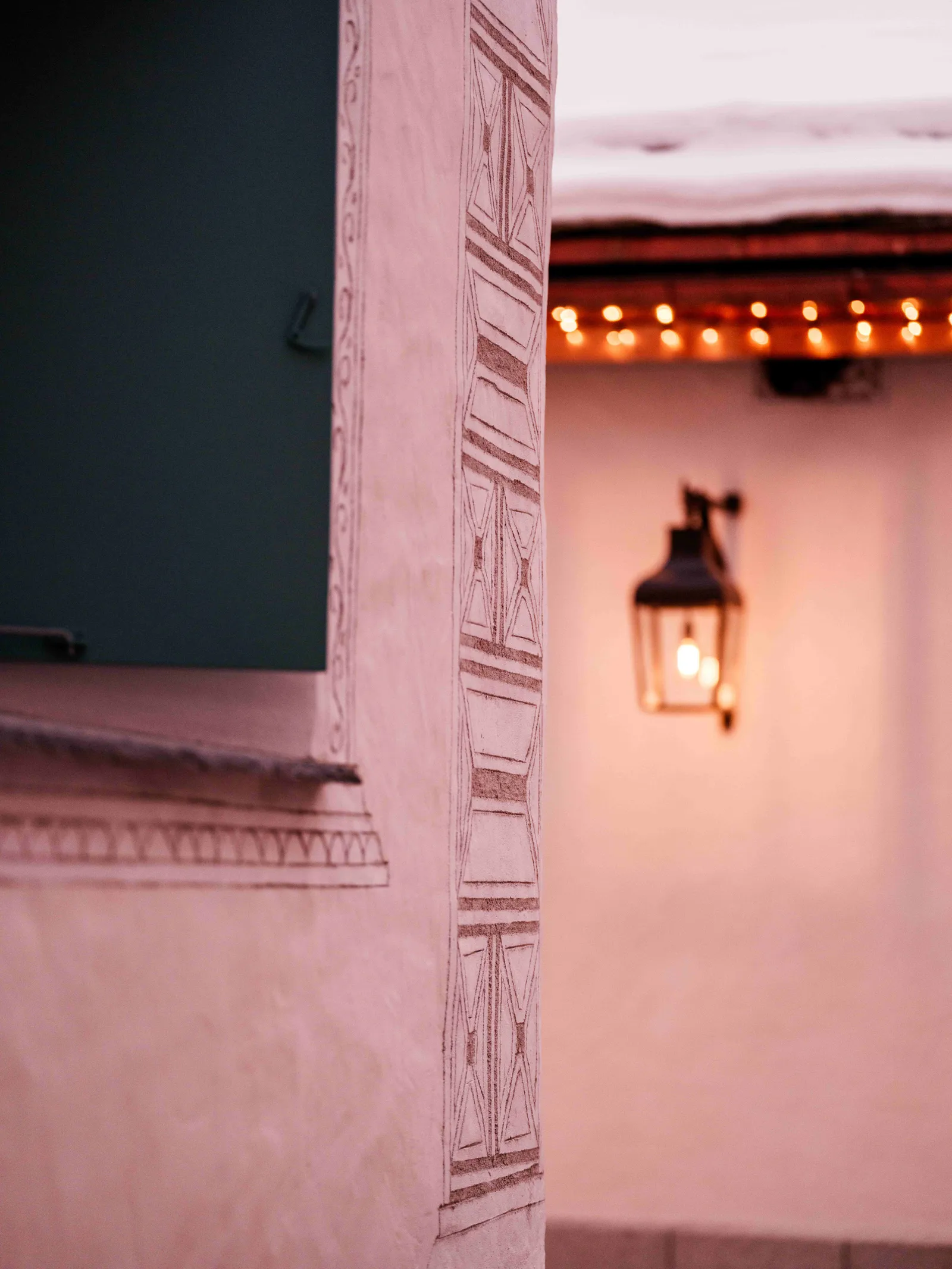
The practice begins in the Engadin, in the Zuoz and Samedan valleys where the chasa typology, thick lime-rendered walls, small deep windows, sgraffito at the lintel, a kachelofen at the center, has been refined for four hundred years. We grew up reading those buildings. Hans-Jorg Ruch's work in Zuoz, the restorations and the new houses built into old farm walls, is the lineage we learned to see by. We do not claim his office, his name, or his commissions. We claim the discipline: read the building first, edit hard, keep the original hand visible, and when you introduce something new, make it confident enough to sit beside the original without apology. That discipline travels. A 1790 Federal in Salisbury, a Shingle Style on a Greenwich back lot, a new fieldstone house on a Litchfield ridge, all of them respond to the same reading. We bring the Engadin standard to a Connecticut hillside and we bring Connecticut framing intelligence back to the Engadin when we work there. The geography is two-way.
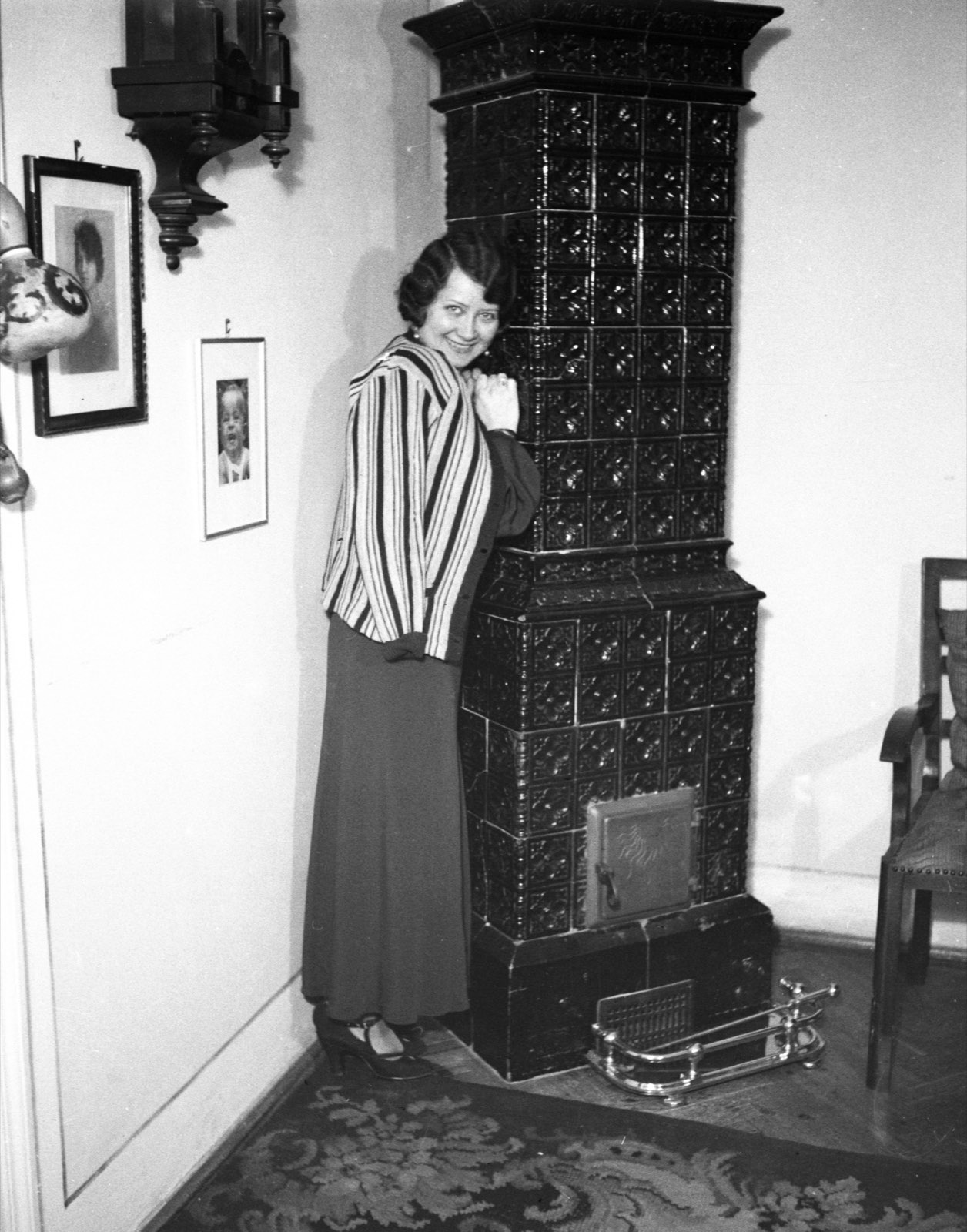
A house that ages forward
Aging forward means the house is built so that ten winters, twenty winters, fifty winters improve it. Larch siding silvers from honey to pewter and stays beautiful for sixty years if it was milled vertical-grain and detailed to drain. Unlacquered bronze door hardware deepens to chestnut and then to black-brown, and you wipe it once a year with a wax-impregnated cloth and that is the maintenance. Lime plaster warms from white to bone to faint ivory as the wall carbonates, and a hairline crack from settlement is filled with a brush of lime wash and disappears. A fumed oak floor takes a hundred dinners and a hundred dog walks and reads better at year fifteen than at year one. Fieldstone laid in lime mortar grows lichen on the north face and that is the point. Aging forward also means the mechanical strategy is honest: a real boiler room, proper insulation values, heat recovery ventilation, snowmelt where the topography requires it, a roof detail that sheds, a foundation that drains, and a chimney that draws. The romance is supported by the engineering. We will not sell the romance without the engineering, and we will not sell the engineering without the romance. They are the same line of work.
The canon we work inside
We work inside a named canon and we say so out loud. Hans-Jorg Ruch in Zuoz, for how a chasa is restored without losing the original hand. Studio Peregalli, Roberto Peregalli and Laura Sartori Rimini in Milan, for the Lombard interior intelligence, the painted walls, the layered textiles, the rooms that read as having always been there. Festen Architecture in Paris, for the Hotel du Couvent in Nice, for how a restoration can hold its silence and let the building speak. Pierre Yovanovitch at Le Coucou Meribel and Chateau de Fabregues in Provence, for the discipline of restraint at scale. Axel Vervoordt in 's-Gravenwezel, for the long-form patience with patina and the courage to leave a wall alone. On the American side, Gil Schafer for the new traditional country house done right, Robert A. M. Stern Architects for the Shingle Style discipline, Peter Pennoyer and Wadia for proportion and detail, Allan Greenberg for classical literacy. We work beside that canon and measure ourselves against it. The standard is set and our job is to meet it on each commission, in the Engadin, in the Italian lakes, in Litchfield County, and on the Greenwich back lots where most of our American work begins. To start a conversation, the studio direct line is 917.502.9236.
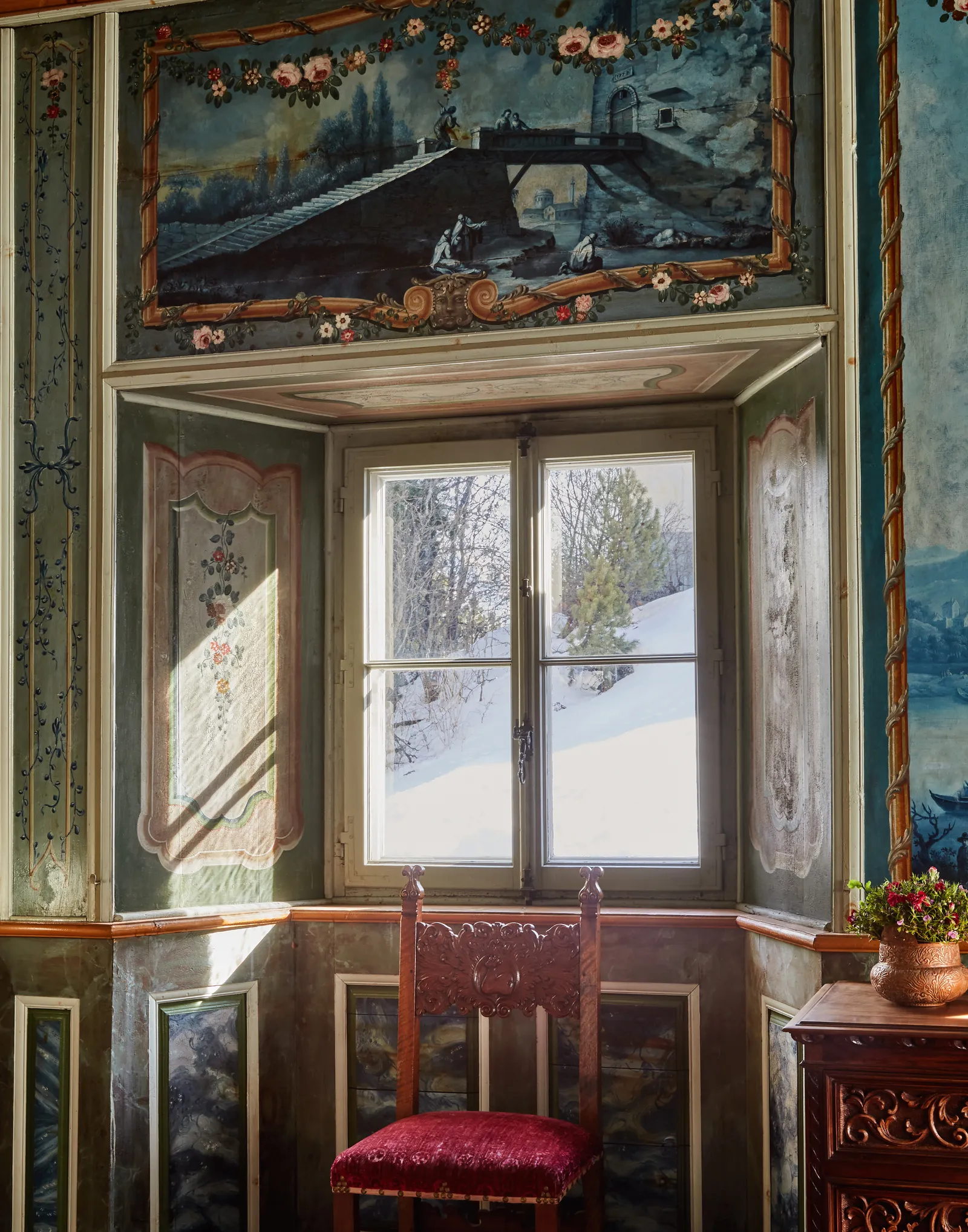
The house as the longevity instrument
The newest layer of the practice is the oldest. Arve sleep rooms, lime-plaster air, radiant masonry heat, cold water, morning light, and real quiet were the Engadin's health system for five centuries, and the published science is finally catching up to the stuva. We build that program into the fabric of every commission that wants it, from a Samedan chasa to a Litchfield new build. The resort world sells this as a membership. We hand it over with the keys.
Restoration + Stewardship
Six to thirty months on a Federal or a chasa. We pull paint stratigraphy, sample lime, repoint chimneys, and rebuild a kachelofen with Sommerhuber. The studio carries the maintenance retainer for ten years after handover. Marmorino lime, Hull Forest Products on oak and chestnut, P.E. Guerin on hardware.
Open ++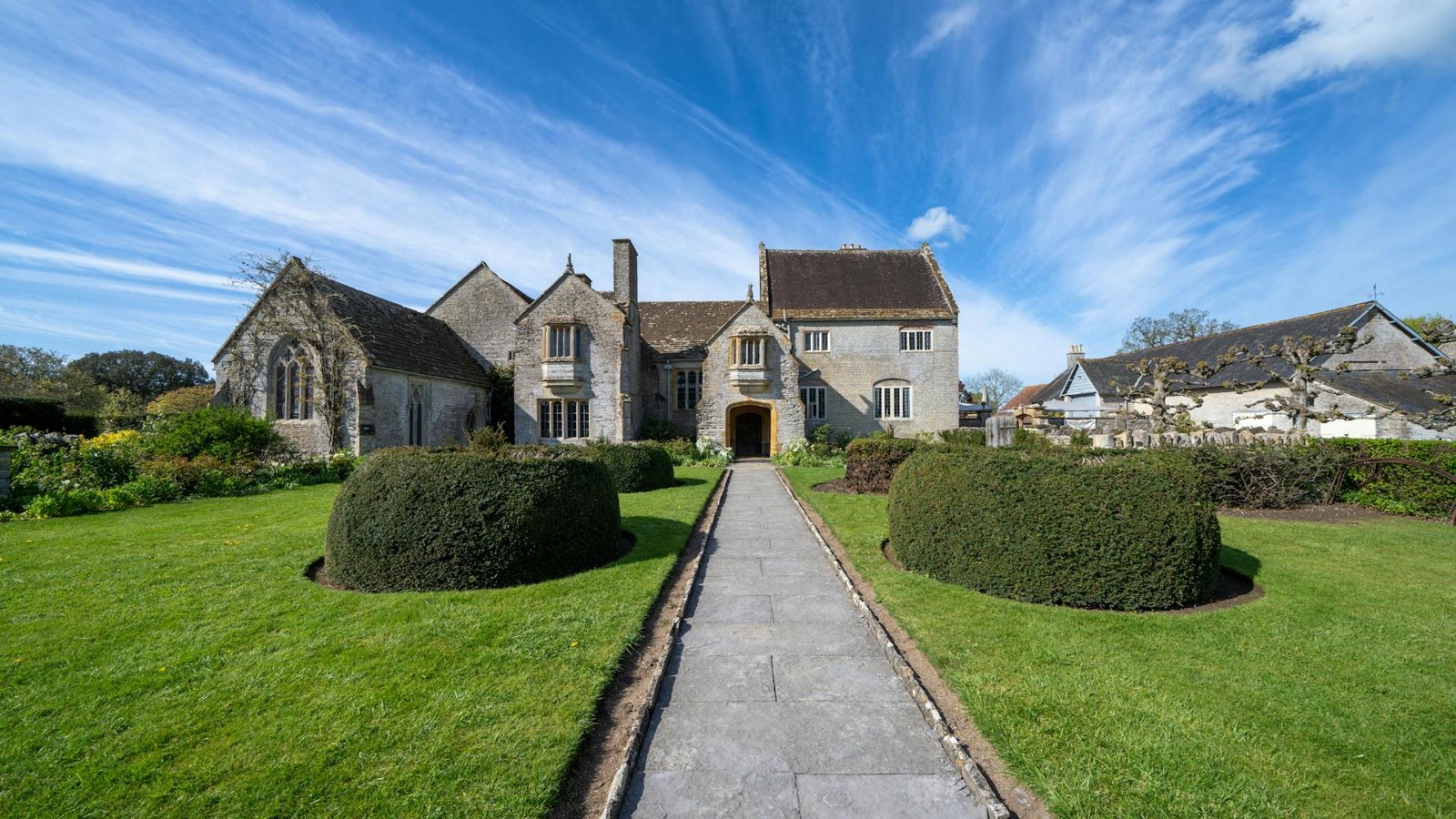
New Construction
A house built new in Salisbury or Greenwich that reads as inherited. Eighteen to thirty months. Allan Greenberg, Gil Schafer, Robert A.M. Stern as the canon we measure against. Hearth and arrival drawn first. Lime walls, fumed oak floors, encaustic cement tile in the mudroom, a Sommerhuber kachelofen against the family-room wall.
Open ++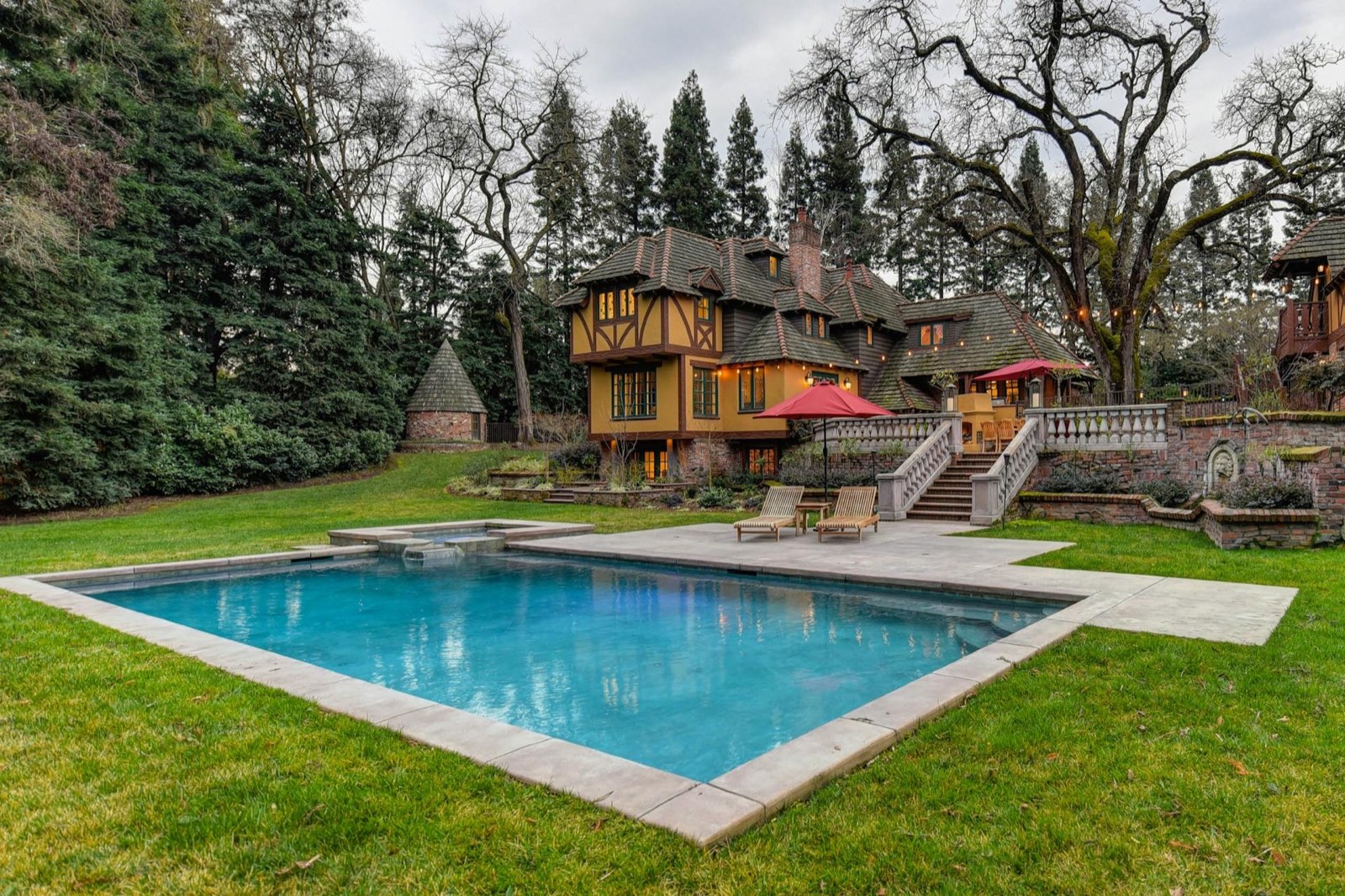
Development Advisory
Early judgment on parcels, programs, and precedents for owners and family offices between Greenwich, the Hudson Valley, the Engadin, and the Italian lakes. We read the building, write a feasibility brief, and name the workshops the spec will need before the offer is final.
Open ++Sources and notes
Working regions
Connecticut (Greenwich, Westport, Darien, New Canaan, Ridgefield, Litchfield County, Salisbury), New York City, the Hudson Valley, the Engadin, the Italian lakes, Lombardy, and Provence.
Named workshops
Henraux for Calacatta and Bardiglio. Sommerhuber for ceramic stoves. Guarda and Ardez ateliers for sgraffito. Salernes for terracotta. Reschio-grade forges in Umbria and northwestern Connecticut. Bianco Bianchi in Florence for scagliola.
Canon, named
Ruch in Zuoz. Peregalli in Milan. Festen at the Hotel du Couvent. Yovanovitch at Le Coucou Meribel and Fabregues. Vervoordt in 's-Gravenwezel. Schafer, Stern, Pennoyer, Wadia, and Greenberg on the American classical side.
Begin a project conversation.
Send a brief or call the studio. We respond to every serious inquiry within two working days.