Chesa Studio/Regions
Engadin
The origin valley. Where the practice learned to read a building before touching it.
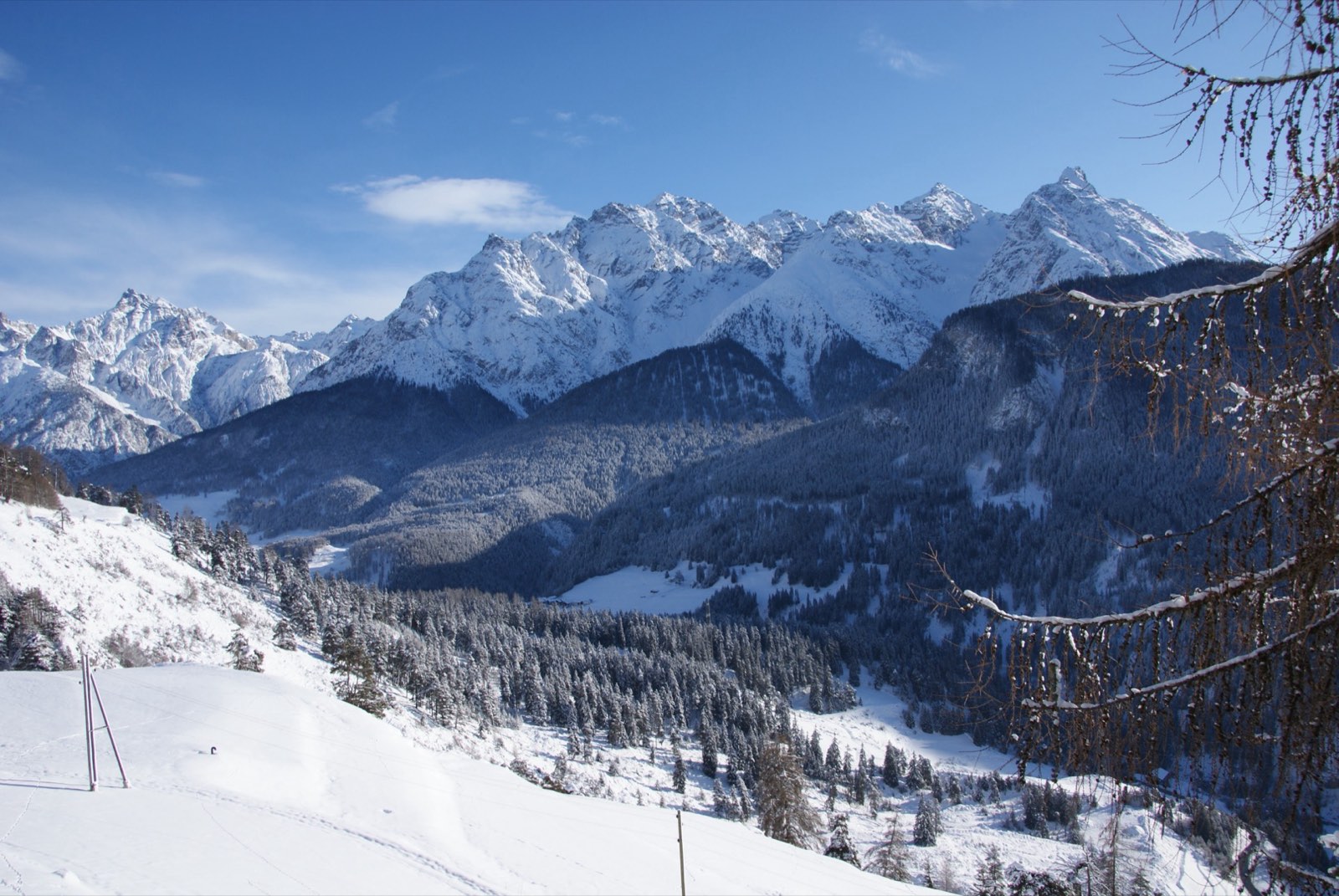
The Engadin is where Chesa learned to work. Before any Connecticut hillside, any Greenwich shoreline lot, any Salisbury Federal, there were winters in Zuoz and Samedan spent measuring sgraffito with a hand lens, mixing lime on site at five in the morning so the trowellers could start at seven, and standing in a stube with a craftsman from Schreinerei Riatsch arguing about whether a 250-year-old arve panel could take a new oil. That argument, repeated across a decade of chasa restorations between Zuoz, Guarda, Ardez, and Scuol, is the spine of the practice. We brought it intact to Connecticut. The Litchfield County houses we build new are built to the standard a Zuoz mason would recognize: fieldstone bedded in lime mortar, hand-troweled lime walls over a lime ground, fumed oak floors butted into stone thresholds, kachelofen running off a hidden flue. The materials are local to where the house stands. The discipline is Engadin.
Read the building first
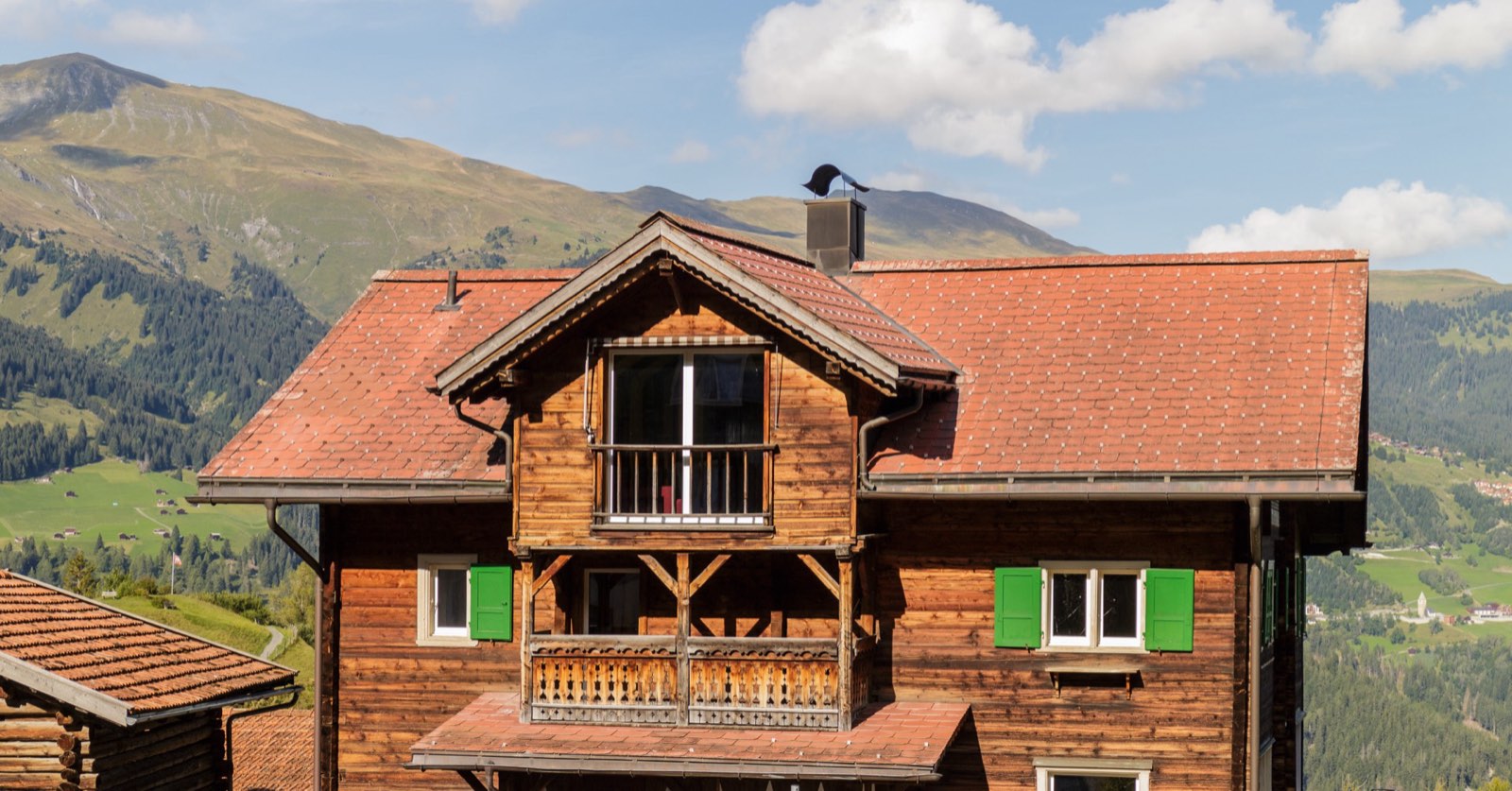
Every Engadin chasa carries its biography on the south facade. The sgraffito panel above the entry door names the family and the year. The Sulèr, the vaulted entrance hall that takes a hay cart, sets the proportion of everything inside. The Palantschin separates the cold side from the warm side. The stube, panelled in arve and warmed by a ceramic stove, is where the house actually lives. We measure those bones before we touch a wall. The same instinct travels to a Federal in Salisbury or a Shingle in Greenwich: we measure the stair, the chimney mass, the original sill heights, the line of the cornice. We edit hard, then we stop.
Sgraffito and the south wall
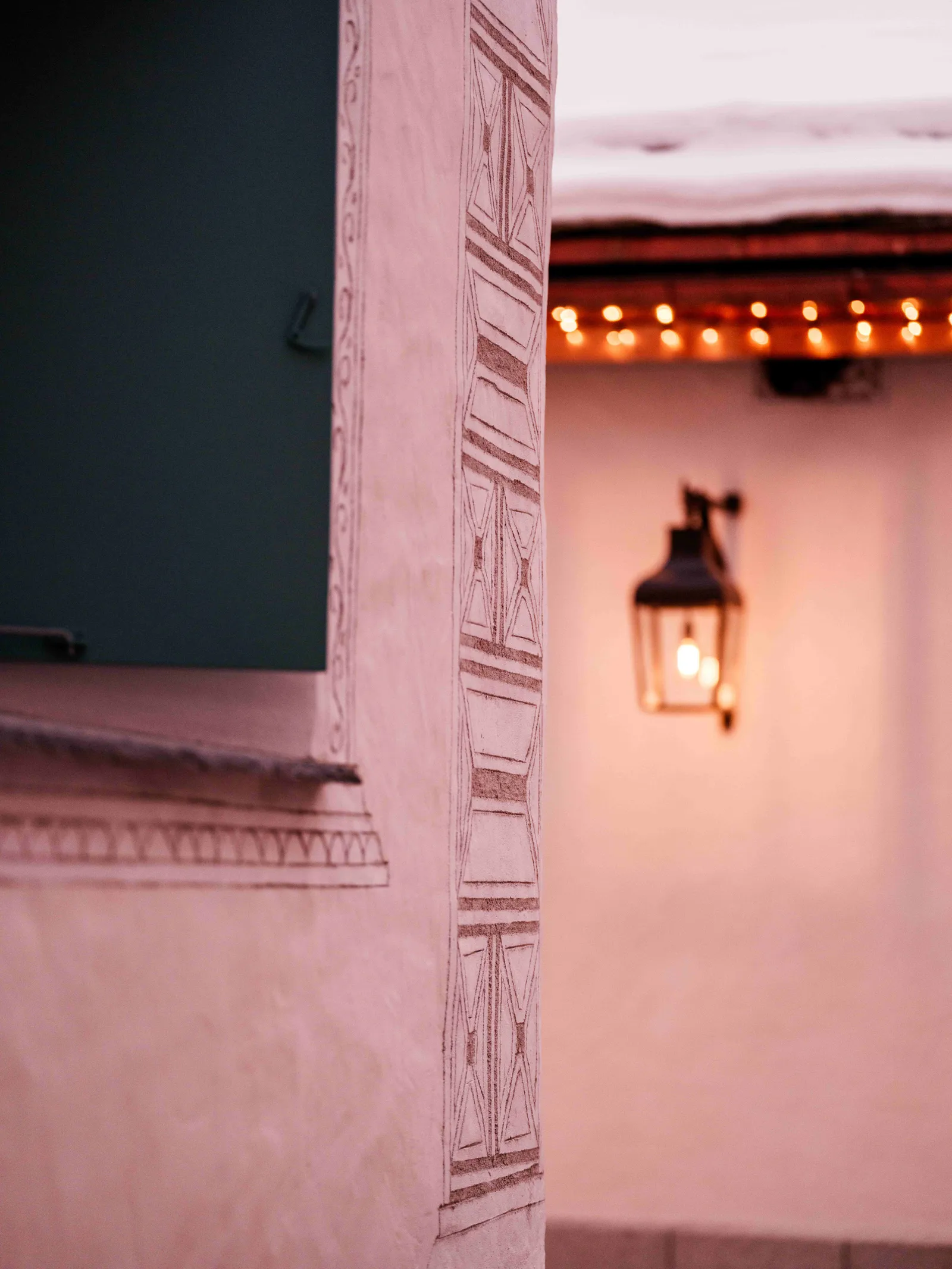
Sgraffito in the Engadin is a working trade, not a decorative effect. Two layers of lime plaster, the upper scraped through to reveal the dark coat beneath, set while wet, finished in a single day. The ateliers around Scuol and Guarda still cut traditional motifs by hand: the rosette, the tree of life, the family monogram, the date stone. We work with practitioners in both villages on restoration commissions and we have brought sgraffito into one Litchfield County entry court, cut into a lime-rendered fieldstone wall by an Engadiner who flew in for the week. The wall is now four winters old and reads as if it has been there since the 1820s.
Arve, larch, and the joinery shops
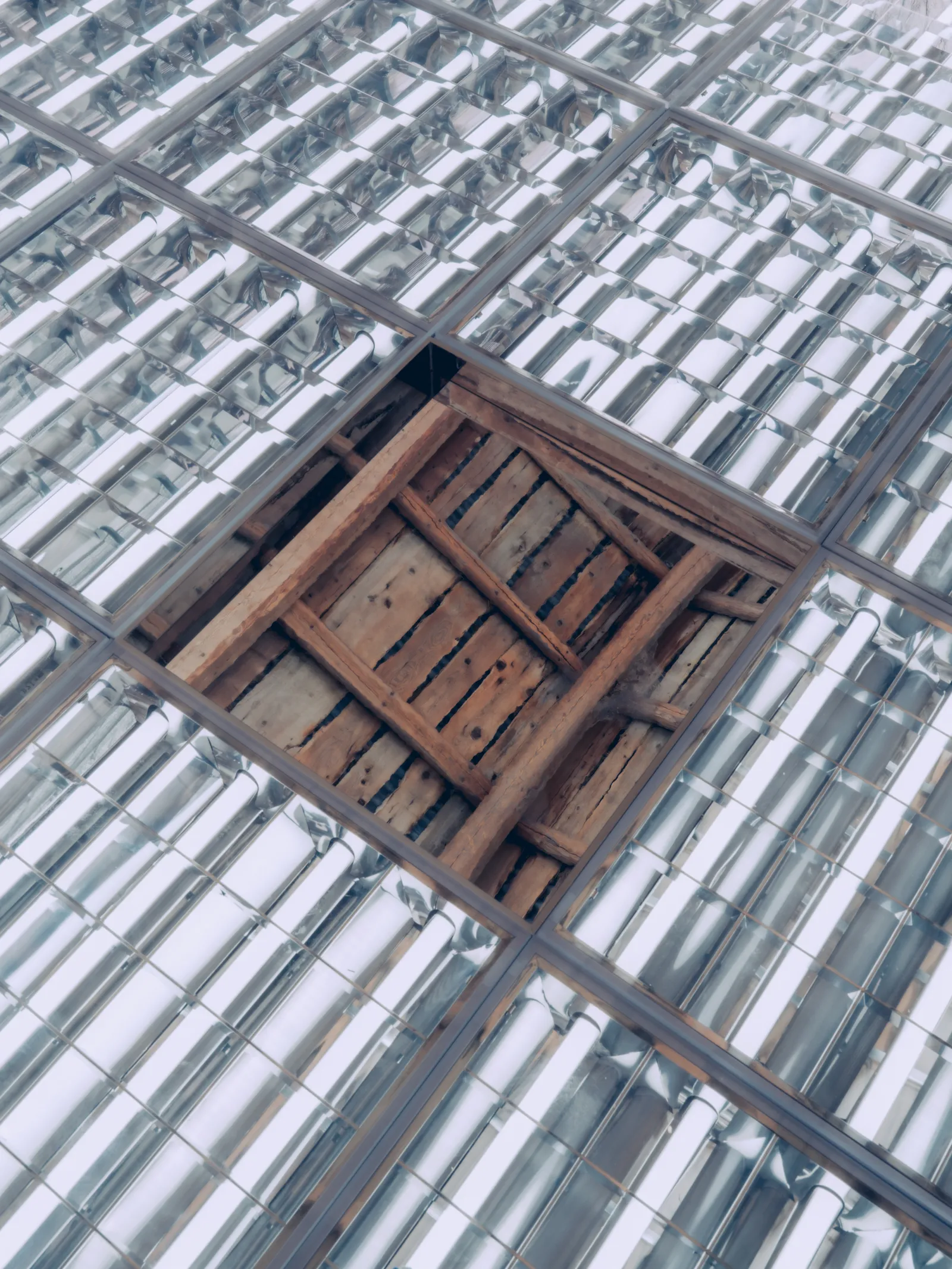
The interior of a chasa is arve pine. Cut in winter, air-dried for years, run through hand planes that leave the surface alive. Schreinerei Riatsch in the lower valley and the Engadiner Lehrwerkstatt fur Schreiner, the Engadin joinery training workshop, are where the trade is kept honest. Apprentices still learn to cut a dovetail by hand before they touch a router. When we panel a stube, we panel it with their stock and their labour. When we build a new library in Connecticut, we order fumed European oak from the same supply chain, and we ask for the same hand-planed finish under a coat of hard wax oil. The room reads warm before a single book is on the shelf.
Ceramic stoves and the working hearth
The kachelofen is the room. It is built before the floor goes down, vented through the wall, faced in handmade tile from Sommerhuber in Upper Austria or from one of the smaller Engadin and Tyrolean ateliers we have used for two decades. The stove burns once a day, in the morning, and holds heat for eighteen hours. The hand stays on the warm tile while the coffee is poured. We have set kachelofen into a Pontresina sitting room, a Sils library, and three Connecticut houses where the client asked for a working hearth that does not look like an American fireplace. The Connecticut versions are vented through stone surrounds laid in lime mortar by a mason from Litchfield. The brief is the same: the hearth is the room, and the room is built around it.
The Ruch lineage, cited with respect
Hans-Jorg Ruch is the reference point for serious Engadin restoration. His work in Zuoz, on Chesa Madalena, on Chesa Marchet, on a long list of houses that pass for unrestored to anyone who is not looking carefully, is the standard. We are not associated with the Ruch office and we do not claim the lineage. We do study it. We visit the houses. We read the plans. We talk to the trades who worked under him. The discipline he taught the valley, that a restored chasa should look exactly like an inherited chasa with nothing added and nothing announced, is the discipline we carry into Greenwich, Westport, Salisbury, and Kent. A new Chesa house in Litchfield County is built to read as inherited from its first winter.
The villages, the geography, the working radius
We work the full valley. Zuoz and Samedan for chasa restoration, Guarda and Ardez for sgraffito and stone, Scuol for the joinery base, St. Moritz for the residential clients who divide their year between the Engadin and the East Coast, Sils and Pontresina for the quieter restoration commissions on the second tier of the valley. We carry an apartment in Samedan as a working base and we keep open relationships with the local trades who let us schedule a December cornice repair against an August Connecticut framing date. Many of our Engadin clients are also Connecticut clients. The same family will keep a chasa in Zuoz and a country house in Litchfield County, and we build and maintain both.
Zuoz and Samedan
Zuoz and Samedan hold the studio's restoration anchor. Hans-Jorg Ruch built the modern Engadin restoration vocabulary in Zuoz; Chasa Planta in Samedan supplies the photographs that run across the site. The studio's Engadin office sits in the upper valley with regular weeks in both villages. Working radius runs to Pontresina, St. Moritz, and Sils.
Open ++Guarda and Ardez
The upper-valley villages where sgraffito is still cut by hand. Restoration commissions here teach us how to leave the original south wall visible and how to repair without announcing the repair.
Open ++Scuol and the lower valley
The joinery base. Schreinerei Riatsch and the Engadiner Lehrwerkstatt fur Schreiner train the carpenters whose hand planes finish our arve panelling and, on a separate order, our fumed-oak Connecticut libraries.
Open ++Sils, Pontresina, St. Moritz
Quieter second-tier restorations and the residential clients who divide the year between the Engadin and Connecticut. Many Chesa briefs cross both addresses, on a single spec sheet, with a single standard.
Open ++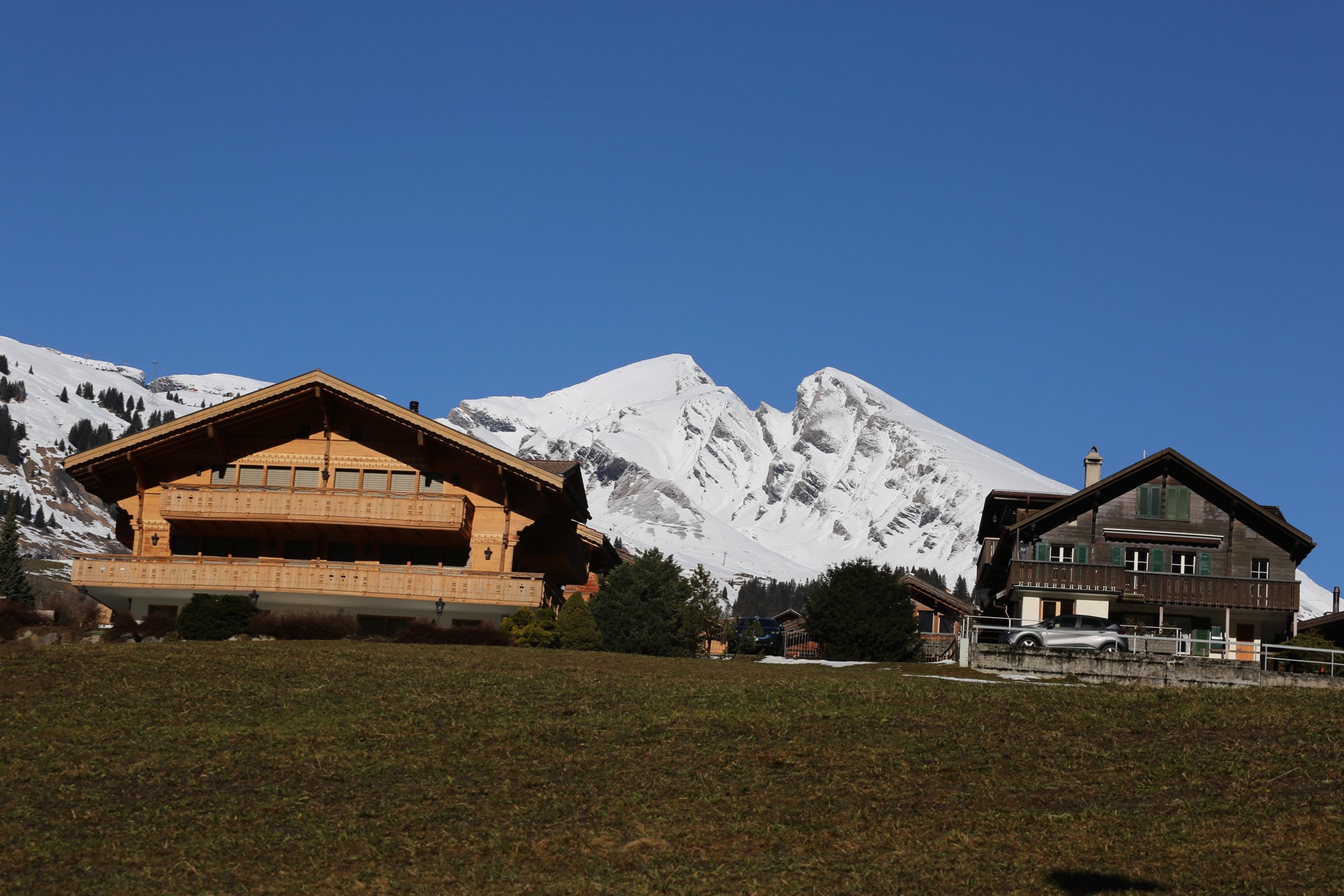
Sources and notes
Workshops we work with
Schreinerei Riatsch for arve and larch joinery, the Engadiner Lehrwerkstatt fur Schreiner for trained carpenters, sgraffito practitioners working out of Scuol and Guarda, Sommerhuber in Upper Austria and selected Tyrolean ateliers for ceramic stoves, local masons across the valley for fieldstone laid in lime mortar.
Building elements we protect
The Sulèr, the Palantschin, the stube, the sgraffito panel above the entry door, the date stone, the hand-cut arve panelling, the ceramic stove, the original south facade, the stone thresholds and sills.
Speak with the studio
For chasa restoration in the Engadin, for new construction in Litchfield County built to the Engadin standard, or for a brief that crosses both, reach us at 917.502.9236.
Begin the brief.
Send a brief or call the studio. We respond to every serious inquiry within two working days.